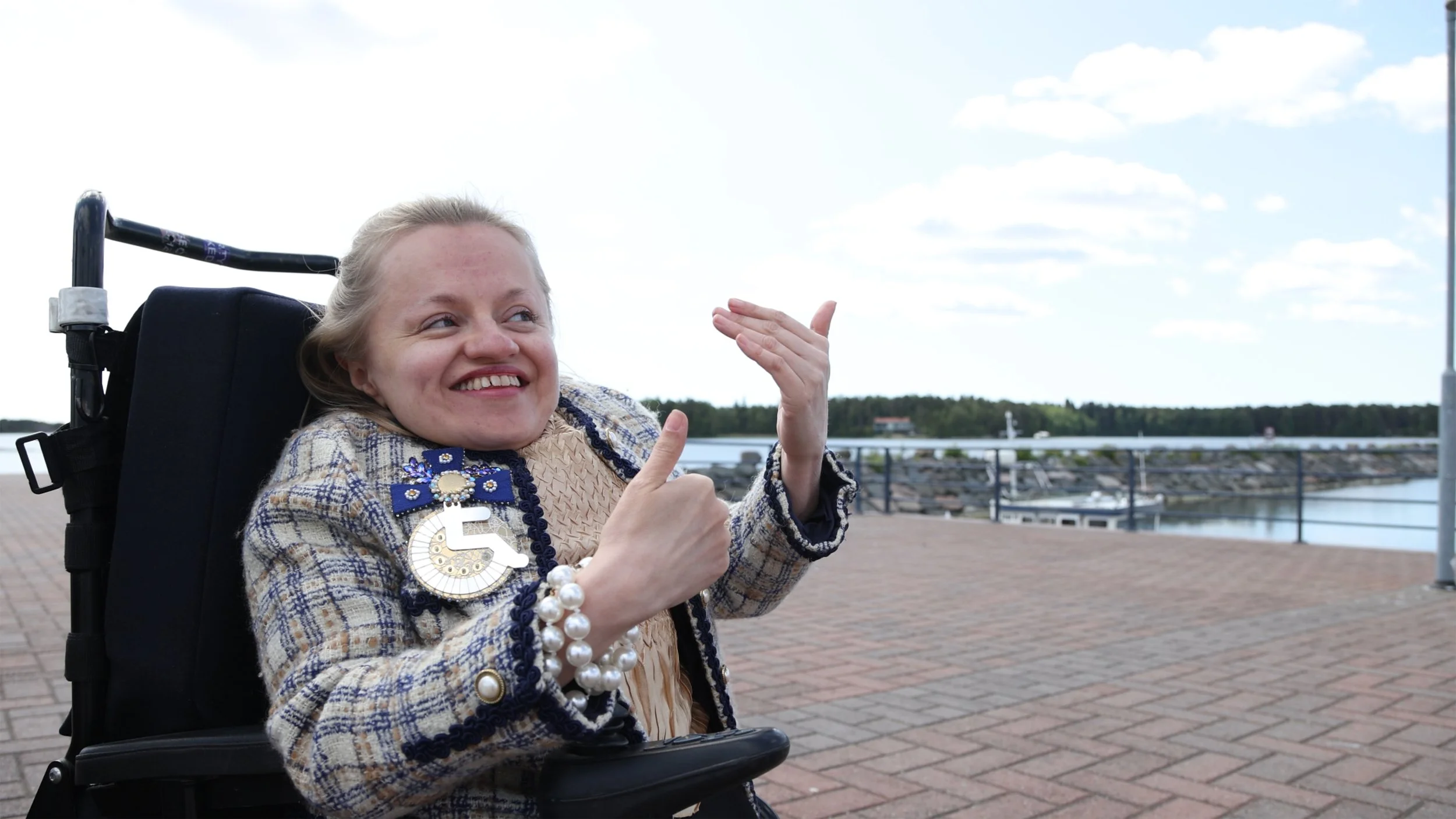
How Great is Your Darkness?, 2024
Film
11 min 10 seconds
*This film features audio descriptions
Why aren’t rare diseases protected on the plea of biodiversity? Human rights policy remains narrow if it is defended only by those who were born physically privileged and lost that position later, rather than also being shaped by people who have never had such an identity. I come from a family with four generations of visual impairments on my father’s side and four generations of brittle bones disease on my mother’s side, so I stand for alternative ways of being human.
My work explores discrimination framed as kindness, human rights, and design that maintain the low status of disability. I oppose structural violence, such as rituals in which people with disabilities are forced to describe their bodies as problems to social and health care professionals in exchange for the services. The pathologization of individuals and the denial of privacy expose people to further abuse and actively damage the self-image. The phenomenon in which we must constantly beg for medical certificates from doctors whose experience may not — and hopefully never — include discrimination, poverty, exclusion, or violence reinforces the medical model of disability, while the disability community works for change by demanding removal of structural barriers to participation.
Tampering with individual features does not eliminate discrimination. Guidance towards what is supposedly normal is not politically correct any more for any other minority than us, persons with disabilities. If we want to increase overall eudaemonia, we should find smarter ways to change attitudes and structures around the entire concept of well-being.
Quisque iaculis facilisis lacinia. Mauris euismod pellentesque tellus sit amet mollis.